
Grooming, Human Trafficking, and Sexual Exploitation in the United Kingdom
- 6 days ago
- 5 min read
A comprehensive investigation analysis of patterns, case studies, systemic failures, and policy responses
Abstract
Grooming, human trafficking, and sexual exploitation constitute interrelated forms of abuse that have persisted as significant social and criminal justice challenges within the United Kingdom. This paper examines the mechanisms through which victims, particularly children and vulnerable individuals, are groomed, trafficked, and exploited. Drawing upon governmental and agency reports, academic literature, and major case studies, including Rotherham, Rochdale, Telford, and Oxford, the paper analyses patterns of offending, victim vulnerability, institutional failures, and legal responses.
Furthermore, it evaluates policy frameworks and proposes preventative strategies aimed at reducing exploitation and improving safeguarding outcomes.
1. Introduction
The issue of grooming and sexual exploitation has gained increasing prominence in the United Kingdom over the past two decades, largely due to a series of high profile investigations that exposed widespread abuse. These cases revealed not only the severity of offences but also systemic failures in institutions tasked with safeguarding vulnerable populations.
Grooming, human trafficking, and sexual exploitation are best understood as part of a continuum of abuse. Grooming represents the preparatory phase, trafficking facilitates control and movement, and sexual exploitation constitutes the primary form of harm inflicted upon victims.
The complexity of these crimes is compounded by factors such as underreporting, victim vulnerability, and evolving methods of offending, particularly through digital platforms. As such, addressing these issues requires a multidisciplinary approach involving law enforcement, social services, education, and public policy.
2. Literature Review
Academic research has identified grooming as a structured process involving stages of relationship building, risk assessment, exclusivity, and sexualisation (Whittle et al., 2013). Offenders strategically target individuals who exhibit vulnerability, including those experiencing neglect, poverty, or emotional instability.
Studies on trafficking highlight its economic dimension, with exploitation functioning as a profit driven enterprise (Shelley, 2010). Within the UK context, Cockbain (2018) emphasises the diversity of offender profiles and cautions against simplistic narratives.
Government reports, particularly the Jay Report on Rotherham, have underscored institutional failures, including victim blaming and lack of coordinated responses (Jay, 2014). Similarly, the Independent Inquiry into Child Sexual Abuse has documented widespread deficiencies in safeguarding systems (IICSA, 2022).
3. Methodology
This paper adopts a qualitative, analytical approach, drawing upon:
Government publications and inquiries
Academic journal articles
Criminal case reports
Statistical data from the Office for National Statistics
The aim is to synthesise existing knowledge rather than present primary empirical research.
4. Defining Key Concepts
4.1 Grooming
Grooming involves deliberate actions taken by an offender to prepare a victim for exploitation. This includes emotional manipulation, trust building, and gradual desensitisation to sexual behaviour (NSPCC, 2023).
4.2 Human Trafficking
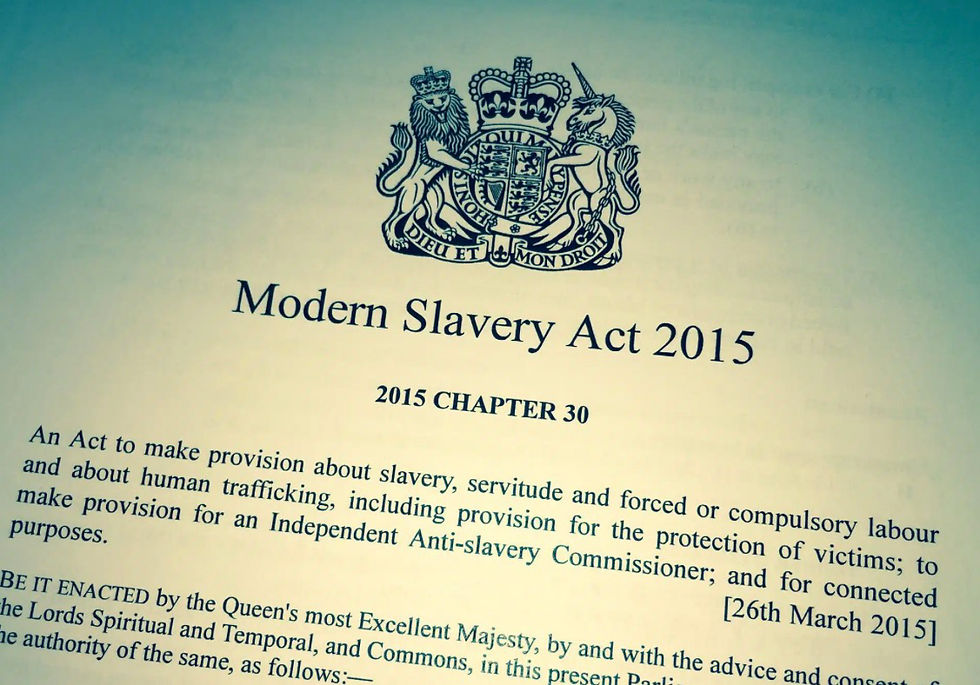
Human trafficking is defined under the Modern Slavery Act 2015 as the recruitment or movement of individuals for exploitation through coercion or deception (Home Office, 2015).
4.3 Sexual Exploitation
Child sexual exploitation is characterised by situations in which a child is manipulated into sexual activity in exchange for something of value, or through coercion (Department for Education, 2017).
5. Statistical Overview
Reliable data remains limited, however key figures include:
Approximately 4,000 identified victims of grooming gangs in England and Wales (Sky News, 2024)
1,400 victims in Rotherham alone (Jay, 2014)
Around 1,000 victims in Telford (Jay, 2022)
The Office for National Statistics reports increasing recorded offences related to modern slavery, reflecting both improved detection and ongoing criminal activity (ONS, 2023).
6. Mechanisms of Grooming and Exploitation
6.1 Emotional Manipulation
Offenders often adopt a “boyfriend” persona, providing affection and validation to create dependency.
6.2 Coercion and Violence
Once control is established, coercion may include threats, violence, and psychological abuse.
6.3 Online Grooming
Digital environments have expanded opportunities for offenders, enabling anonymous and rapid communication with potential victims.
6.4 Trafficking and Movement
Victims may be transported between locations to facilitate exploitation and avoid detection.
7. Case Studies
7.1 Rotherham
The Rotherham scandal remains one of the most significant cases of child sexual exploitation in the UK.
Background
Between 1997 and 2013, an estimated 1,400 children were subjected to sexual exploitation (Jay, 2014). Victims were predominantly young girls, often from disadvantaged backgrounds.
Patterns of Abuse
Victims were:
Groomed through attention and gifts
Subjected to rape and gang assaults
Trafficked between towns
Institutional Failures
The Jay Report identified:
Systematic disregard for victims
Failure to act on intelligence
Victim blaming attitudes
Impact
The scandal led to national outrage, policy reforms, and increased scrutiny of safeguarding practices.
7.2 Rochdale
Overview
The Rochdale cases involved multiple offenders convicted of grooming and exploiting young girls.
Methods
Use of alcohol and drugs
Exploitation in commercial premises
Coordination among offenders
Failures
Initial reluctance to prosecute was attributed to concerns about victim credibility (House of Commons, 2013).
7.3 Telford
Scale
The Telford inquiry estimated approximately 1,000 victims over several decades (Jay, 2022).
Issues
Persistent failure to intervene
Normalisation of abuse
Lack of accountability
7.4 Oxford
Characteristics
The Oxford cases demonstrated clear links between grooming and trafficking, with victims moved between locations and exploited by multiple offenders.
8. Victimology
Victims often share characteristics of vulnerability, including:
Experience of prior abuse
Placement in care
Socioeconomic disadvantage
However, it is critical to emphasise that vulnerability does not equate to inevitability.
9. Offender Profiles
Research indicates that offenders vary widely in background, however common traits include:
Opportunistic targeting of vulnerable individuals
Use of social networks
Engagement in organised or semi organised groups
10. Institutional Failures
10.1 Policing
Failures include:
Inadequate investigations
Failure to recognise patterns
10.2 Social Services
Issues include misinterpretation of exploitation as consensual behaviour.
10.3 Cultural Barriers
Concerns about reputational damage and sensitivity contributed to inaction.
11. Policy Analysis
11.1 Modern Slavery Act 2015
The Act represents a significant legislative step, consolidating offences and enhancing penalties.
Strengths:
Clear legal framework
Increased penalties
Victim protection provisions
Limitations:
Challenges in enforcement
Limited victim support resources
11.2 Safeguarding Policies
Multi agency safeguarding hubs aim to improve coordination between services. However, effectiveness varies across regions.
12. Prevention Frameworks
12.1 Early Intervention
Identifying at risk individuals and providing support before exploitation occurs.
12.2 Education
Raising awareness among young people about grooming tactics.
12.3 Digital Regulation
Improving monitoring and safety on online platforms.
12.4 Multi Agency Collaboration
Enhancing cooperation between police, social services, and education providers.
13. Discussion
The persistence of grooming and exploitation reflects both the adaptability of offenders and systemic weaknesses in safeguarding structures. While legislative and policy developments have improved responses, gaps remain in implementation and resource allocation.
14. Conclusion
Grooming, human trafficking, and sexual exploitation represent complex and interconnected challenges within the United Kingdom. Addressing these issues requires sustained commitment, comprehensive policy frameworks, and a focus on victim centred approaches.
References
Global Intelligence Agency HQ (GIAHQ) 2025 - Case files related data and statistics.
Cockbain, E. (2018) Offender and victim networks in human trafficking. London, Routledge.
Department for Education (2017) Child sexual exploitation definition and guide. London, DfE.
Home Office (2015) Modern Slavery Act 2015. London, HMSO.
House of Commons (2013) Child sexual exploitation and the response to localised grooming. London, Parliament.
Independent Inquiry into Child Sexual Abuse (2022) Final Report. London, IICSA.
Jay, A. (2014) Independent Inquiry into Child Sexual
Exploitation in Rotherham. Rotherham Council.
Jay, A. (2022) Independent Inquiry into Telford Child Sexual Exploitation. London.
NSPCC (2023) Grooming: Definition and signs. London, NSPCC.
Office for National Statistics (2023) Modern slavery in the UK. London, ONS.
Shelley, L. (2010) Human trafficking: A global perspective. Cambridge University Press.
Sky News (2024) Grooming gangs data analysis.
Whittle, H. et al. (2013) ‘A review of online grooming’, Journal of Sexual Aggression, 19, pp. 1–15.


Comments